

01The verdict
7.5 / 10 · Best for coverage
Keep Uber installed, compare the fare every time
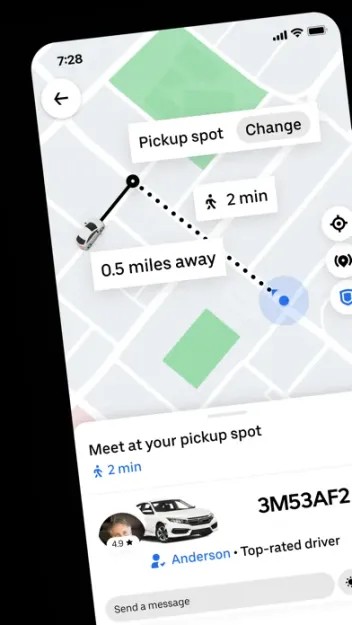
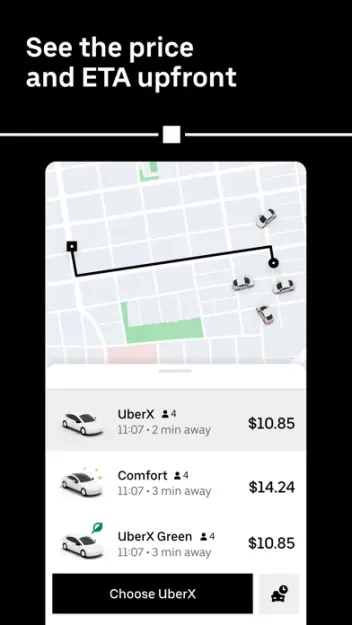
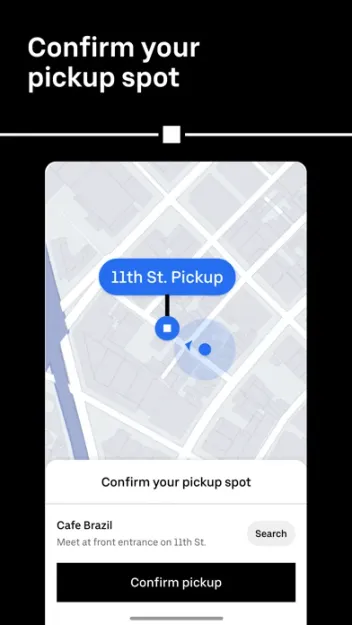
Uber is the rides app we’d keep on a US phone for airport runs, late nights and cities where coverage matters. The map, upfront quote and ride categories are clear. Pin drop pickup and status sharing reduce the curb scramble.
Money is the friction. Each fare stacks base, time, distance, booking fee and often surge, tolls or airport charges. Uber One at $9.99 a month or $96 a year returns credits on eligible rides and Eats perks; it is not a flat discount on every trip. We’d compare Uber with Lyft on the same route before confirming, every busy night.
02Screenshots
From the App Store
A look inside the app
03Design & booking
Design & booking · 8.5
Map, quote, request in a few taps
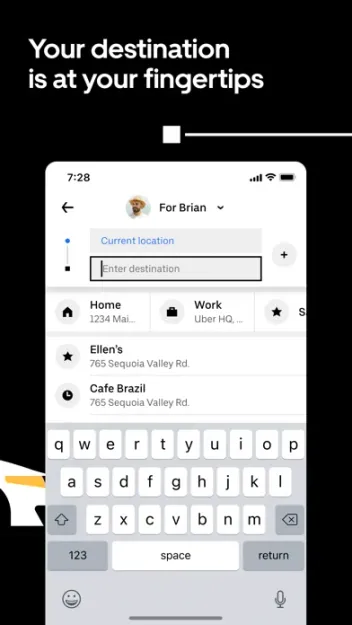
Open the app, set destination, compare categories, confirm. Upfront pricing shows a total before you request in supported markets. Saved places, calendar scheduling and airport flows cut repeated typing.
The home screen also pushes Eats, grocery and other verticals. That is handy if you use them and noisy if you only want a car. We ignore the extra rows and jump straight to the destination field.
04Ride options
Ride options · 8.5
From Share to Black in one list
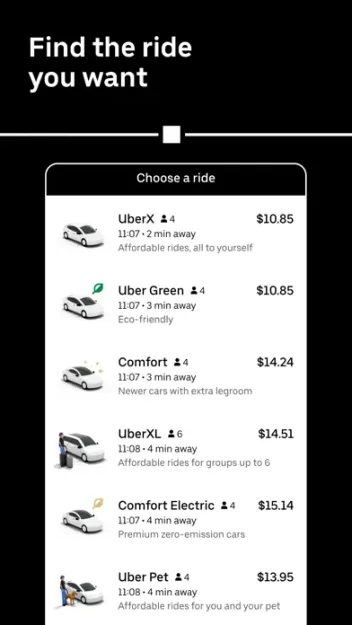
UberX covers ordinary trips. Comfort, XL, Green, Black and local products appear where supply exists. Wait times and seat counts are visible before you commit. Pet and accessibility options show in cities that support them.
Coverage is Uber’s edge in many metros. In a mid-size city at 1 a.m., Uber often still has cars when smaller networks thin out. Product names and availability change by market, so the list you see locally is the one that matters.
05Pricing transparency
Pricing transparency · 6.5
Upfront helps; the receipt still has layers
Uber quotes an upfront price in most US trips we take. That quote already folds in the platform’s booking or service fee. Open the breakdown when you can: base, time, distance, booking fee, surge multiplier, tolls and airport fees each explain a slice.
National averages put booking fees in a roughly $2 to $3.50 band depending on city, with higher totals in dense markets. Surge is the swing factor. The same five-mile trip can differ by several dollars versus Lyft in the same minute because each app prices demand on its own supply. Transparency improved with upfront totals; predictability across evenings did not.
06Safety
Safety · 8.0
Tools that matter on real trips
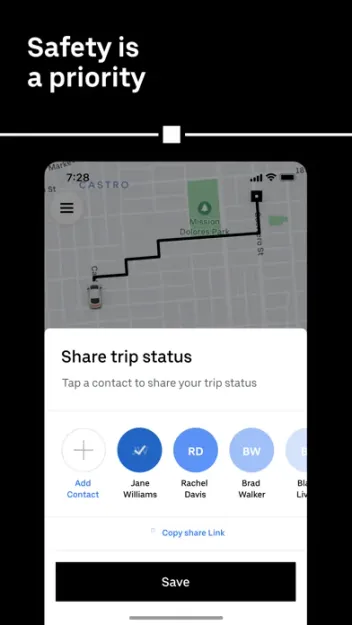
Share trip status, live location with contacts, an in-app emergency button and driver photo/plate checks are the basics we use. PIN verification and ride check prompts appear on longer or irregular trips in many regions.
Safety still depends on local licensing, background checks and how you use the tools. We verify plate and name before entering, sit in the back when alone, and share status on night rides. The app supports that habit; it cannot replace it.
07Plans & pricing
Value · 7.0
Pay per ride, or Uber One if you stack trips
US membership prices as of October 2026 from Uber’s Uber One pages. Ride fares are set per trip; confirm the quote in-app.
- Pay per rideBase + time + distance + booking fee; surge when busyVaries
- Uber One monthlyRide credits and $0 delivery fee on eligible Eats$9.99/mo
- Uber One yearlySame benefits prepaid; student plans cost less$96/yr
Pay per ride is the default. Uber One is $9.99 a month or $96 a year, with student pricing lower after verification. Members earn credits back on eligible rides and get $0 delivery fee plus order discounts on eligible Uber Eats. Credit rates and Eats terms change; read the current member screen before you renew.
Value depends on frequency. A few airport trips a month rarely beat comparing Uber and Lyft live. Daily commuters and Eats regulars can clear the membership fee. Occasional riders should skip One and chase the lower upfront quote.
08Privacy
Privacy · 6.5
Location-heavy by nature
Uber needs precise location to match riders and drivers. Trip history, payment methods and device data sit in your account. You can download or delete account data through Uber’s privacy tools, and you can limit some notification and ad preferences.
Ride sharing is not an anonymous product. We use a strong account password, hide exact home address labels when we can, and review saved places after travel. Treat the app as a logistics service that stores where you go.
09Alternatives
Worth a look
When another option beats requesting a car

Airbnb
Wins when the trip is a stay, not a ride across town. Different job, same travel wallet.

WhatsApp
Better when a friend, hotel desk or local driver already has your chat thread.

Telegram
Useful for group trip coordination and shared live locations. Not a rideshare network.
Lyft is the direct fare rival in cities where both operate. Keep both apps, compare the same pickup and drop-off, and take the lower upfront total. We leave Lyft out of the icon row only because this catalog does not carry its asset yet; on the street it is the comparison that matters.
10Bottom line
Quote first, membership second
Install Uber, compare Lyft, add One only if you stack use
Keep Uber for coverage and upfront booking. Before busy rides, check Lyft on the same route. Skip Uber One until monthly rides or Eats orders clearly clear $9.99, or take the $96 yearly plan if a card benefit already reimburses it. Use the safety toolkit on night trips. If you only need lodging, start with Airbnb. If a friend can pick you up, a WhatsApp ping still beats a surged fare.