01The verdict
8.0 / 10 · Best for runners and cyclists who race
Stay free for kudos. Pay yearly for routes and races.
Strava remains the go-to social fitness app for runners and cyclists. GPS recording, the activity feed, clubs and Beacon work on the free plan, so casual tracking costs nothing.
Premium is where the app earns its keep. Route building, full segment leaderboards, Live Segments, Fitness & Freshness and matched activities turn logged miles into training. We’d take the $79.99 yearly Individual plan if you race or plan routes often, and skip the subscription if you mostly want kudos.
02Screenshots
From the App Store
A look inside the app
03Tracking & recording
Tracking & recording · 9.0
Reliable GPS across phone, watch and bike computer
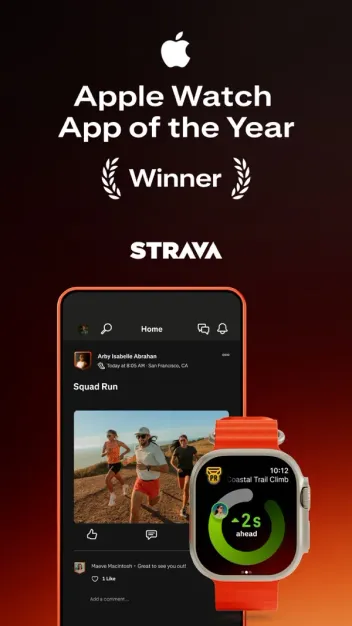
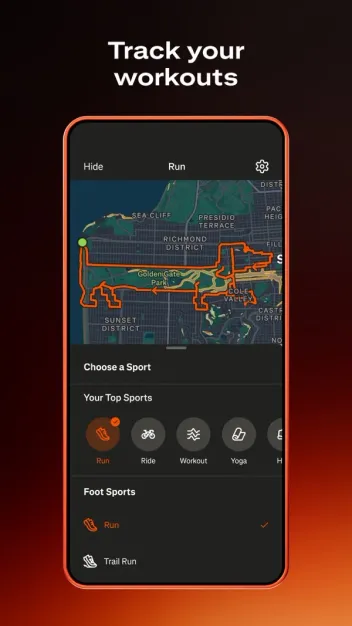
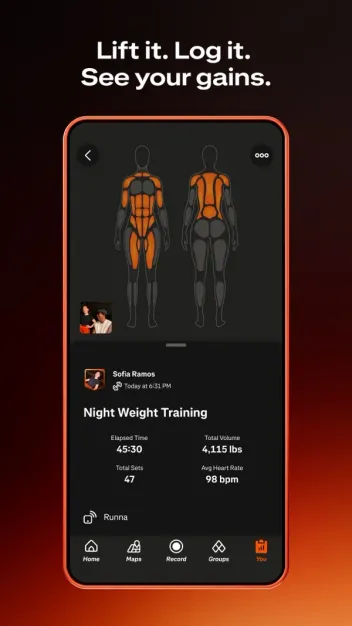
Strava records runs, rides, walks, hikes and dozens of other sports from the phone app, Apple Watch, Wear OS and a long list of bike computers and head units. Distance, pace, elevation and heart rate land on the activity page with splits you can read at a glance.
Phone GPS is accurate enough for most road and trail work. Pairing a chest strap or a dedicated GPS watch tightens the data further, and Strava imports those files cleanly. Live stats overlays show speed and distance while you move, and weather from the activity window shows up on the summary afterward.
Beacon shares your live location with up to three safety contacts for the length of an activity. It works on the free plan in the phone app; using it on some matching devices needs a subscription.
05Routes & segments
Routes & segments · 8.5
Heatmaps for new cities, segments for old loops
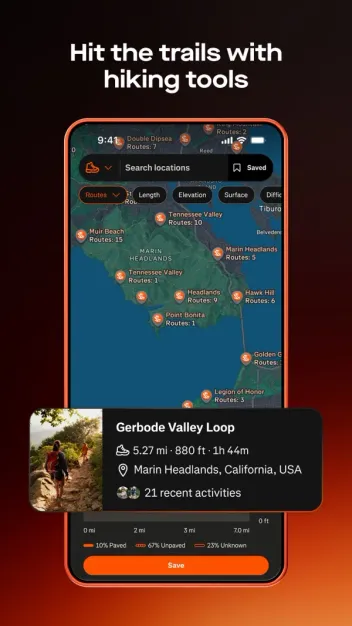
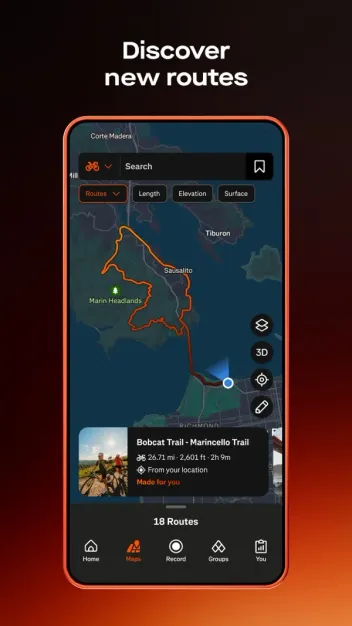
Subscription route tools are the clearest reason to pay. You can draw a route on the phone or web, snap it to roads and trails, and lean on community heatmaps to see where people actually run and ride. Suggested routes and personal heatmaps help when you travel or get bored of the same three loops. Offline maps keep the line on screen when cell service drops.
Segments cut popular stretches into timed efforts with leaderboards. Live Segments compare you to your PR and the current KOM/QOM/CR while you are still on the effort. Filtered leaderboards by age, weight, followers or club make the competition local instead of global.
Free accounts still see segments on a route and can post efforts. Full leaderboards, deep effort comparison and Live Segments sit behind the subscription.
06Training analysis
Training analysis · 8.0
Fitness graphs that reward a real training block
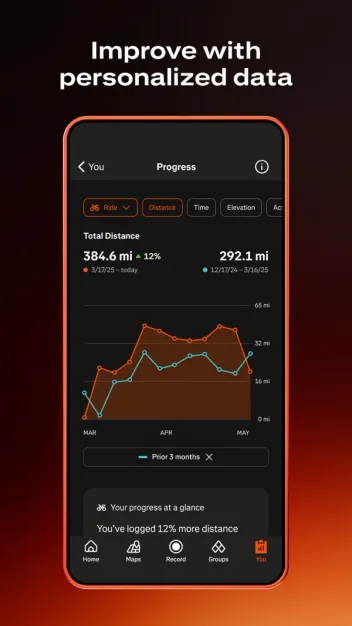
Paid analysis is aimed at people who train on purpose. Fitness & Freshness charts fitness, fatigue and form over time. Relative Effort scores how hard a session was from heart rate or how hard it felt. Matched activities line up today’s loop against past runs on the same path.
Custom goals, best efforts, grade-adjusted pace, pace and heart-rate zone charts, and power analysis for metered rides fill out the picture. Training plans for running and cycling exist inside the app if you want a set block without a separate coaching tool.
If you already get deep charts from Garmin Connect, TrainingPeaks or a coach’s platform, Strava’s analysis overlaps. The unique piece is tying that data to segments and the social graph in one place.
07Plans & pricing
Value · 7.0
Yearly Individual is the plan that makes sense
US prices as of October 2026, with a trial of about 30 days on eligible accounts. Confirm the current offer at checkout:
- FreeGPS tracking, feed, clubs, Beacon on phone$0
- IndividualRoutes, segments, training analysis; or $11.99/mo$79.99/yr
- FamilyUp to 4 members, billed yearly$139.99/yr
- StudentVerified students, yearly only$39.99/yr
Monthly Individual at $11.99 adds up to about $144 a year, so the $79.99 yearly plan is the smart pick if you stay longer than a race season. Family at $139.99/yr covers up to four people. Students can take $39.99/yr after verification. The free tier is enough for logging and social; you pay when routes, segments and training graphs become part of the week.
08Privacy
Privacy · 7.0
Map visibility matters more than the privacy policy
Strava defaults new adult accounts toward public profiles and public activities, with the first and last 200 meters of maps hidden in the app. You can set activities to Followers or Only You, hide map sections, and opt out of adding to community heatmaps and product improvements.
GPS activities still create a detailed record of where you live, train and travel. Heatmaps and start points have exposed private locations in the past when privacy settings were left open. Set map visibility and activity privacy before your first upload if your address, workplace or training grounds should stay quiet.
Export and delete controls exist in account settings. Since mid-2026, developers of personal API apps generally need an active Strava subscription, which limits how you pull your own data into other tools.
09Alternatives
Worth a look
When another app fits the job better

Headspace
Wins when recovery and mental training matter more than GPS miles. Guided meditation and focus sessions sit beside your workouts, not on a map.

Calm
Better for sleep stories and wind-down than for logging runs. Use it after the ride; it will not replace Strava's routes or segments.

Discord
Strong for club chatter, race-day coordination and voice hangouts. It has no maps, segments or training analysis, so it complements Strava rather than replacing it.
10Bottom line
Pay for training, not for kudos
Free for casual tracking. Yearly if you race.
Install Strava, log a few weeks free, and lock down privacy on maps and activities on day one. If you find yourself wanting route builder, full segment leaderboards or Fitness & Freshness, take the trial and switch to the $79.99 yearly Individual plan. Stay free if the feed and a simple activity history are enough.
04Social & clubs
Social & clubs · 8.5
Kudos, clubs and a feed that never sleeps
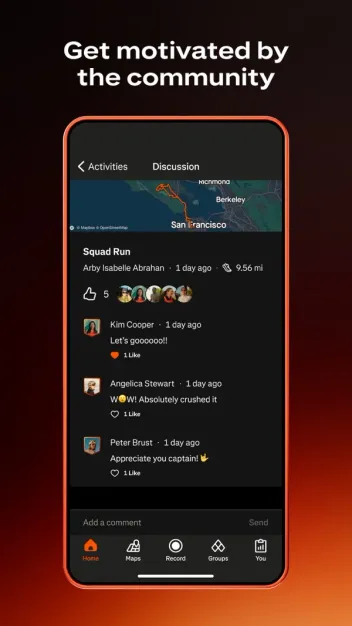
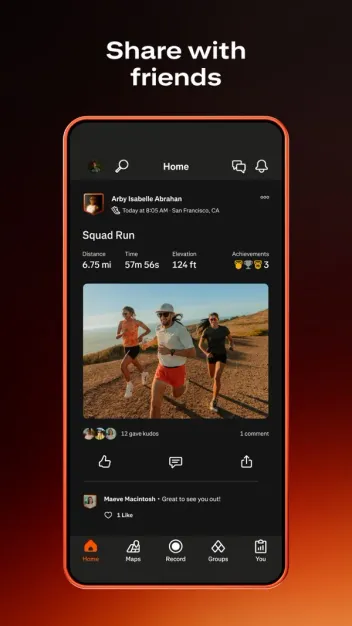
The Following feed is Strava’s heart. Friends’ activities, club posts and race shout-outs arrive with kudos and short comments, which is enough social pressure to lace up on a tired Tuesday.
Clubs group local runners and cyclists around challenges, group rides and shared routes. Group challenges on a subscription add another layer of pressure to show up when a solo streak is not enough.
The cost of that energy is noise. A busy feed buries your own training stats under other people’s cool-downs, and the social loop can push volume you did not plan. Mute freely if you train with a calendar, not a crowd.